

From first click to repeat purchase: the stages, steps, and examples behind a funnel that feeds itself
Most websites don’t have a traffic problem. They have a follow-up problem.
Someone visits your store, browses a few products, and leaves. You paid for that click, or spent months earning it through SEO, and you never learn who they were. A lead generation funnel fixes that. It turns anonymous visitors into known prospects, builds trust with them over time, and guides them toward a purchase.
This guide covers what a lead generation funnel is, the stages it moves through, how to build one step by step, and real examples you can adapt for your own business.
What Is a Lead Generation Funnel?
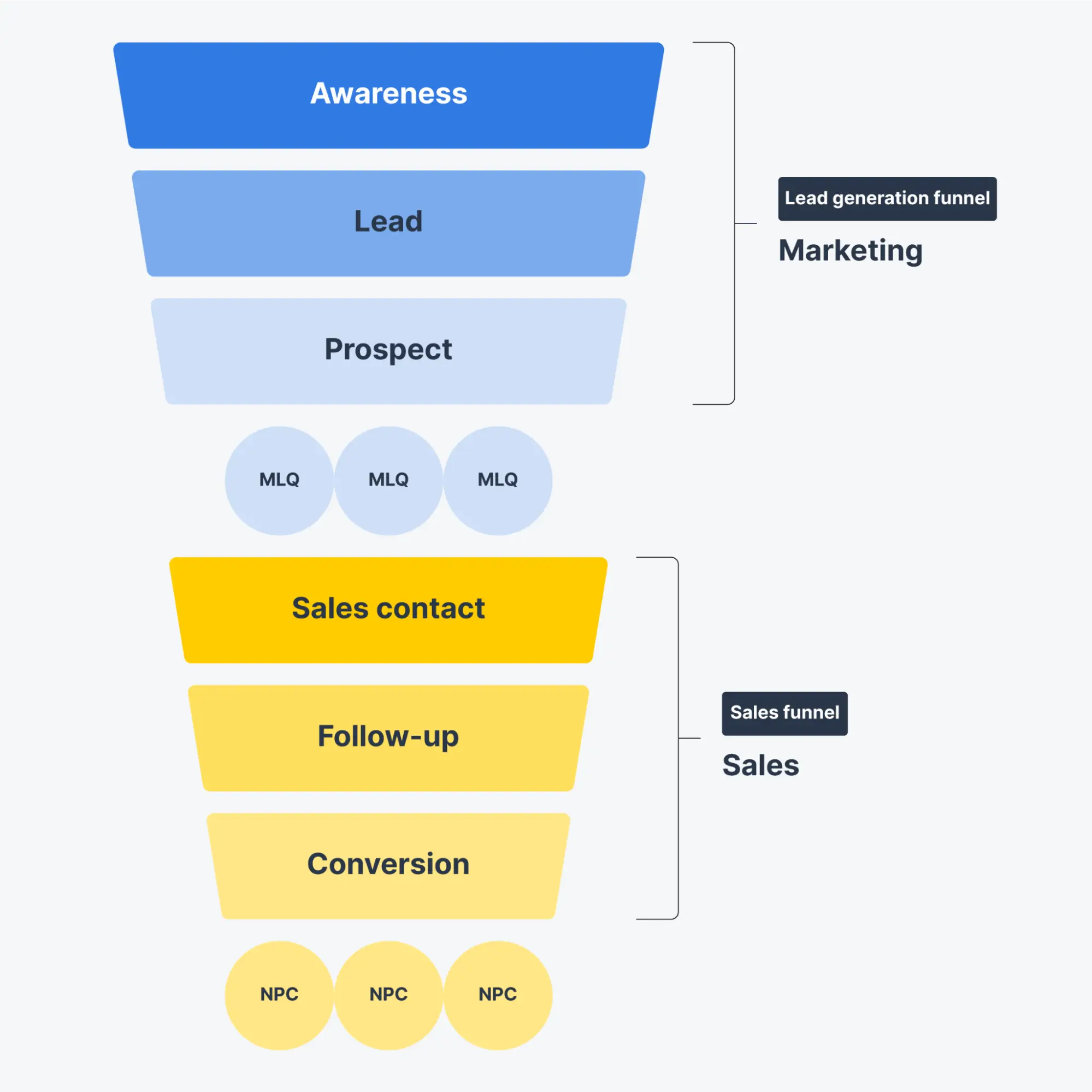
A lead generation funnel is a structured path that moves a person from first discovering your brand to becoming a lead, then a customer, and ideally a repeat buyer.
It’s called a funnel because the audience narrows at each stage. Many people see your content, fewer give you their contact details, and fewer still buy. The goal isn’t to stop that narrowing. It’s to make each step easier and more relevant, so more of the right people make it through.
A simple version looks like this:
Traffic → Landing page → Lead capture → Nurture → Conversion → Retention
A funnel isn’t a single popup or a single email. It’s a system where every piece has one job: move the right person to the next step.
Why You Need a Lead Generation Funnel
You stop depending on first-visit purchases. Most visitors aren’t ready to buy the first time they arrive. Without a way to capture them, they’re gone.
You own your audience. Email lists, SMS lists, and WhatsApp contacts belong to you. Ad platforms and social algorithms don’t.
You lower your acquisition costs over time. A lead you’ve nurtured costs far less to convert than a cold visitor you have to pay for again.
You can see where you’re losing people. With a funnel, you can find the exact stage that leaks, instead of guessing why sales are flat.
You increase customer lifetime value. A good funnel doesn’t end at the first purchase. It continues into upsells, repeat orders, and referrals.
The Stages of a Lead Generation Funnel
Different businesses label these stages differently, but the logic is the same. Here’s a practical seven-stage model.
Stage 1: Traffic (Awareness)
This is where people first discover you. The question to answer is: how do I get the right people to my site?
Common sources include:
- SEO and blog content
- Google Ads
- Meta (Facebook and Instagram) ads
- YouTube
- Influencers and partnerships
- Pinterest and other social platforms
The quality of traffic matters more than the volume. Ten thousand irrelevant visitors will produce fewer leads than five hundred people who actually need what you offer.
Stage 2: Content and Landing Page (Interest)
Once someone arrives, they need a reason to stay. The question here is: why should they care?
This stage might be a blog post, a product page, a comparison page, or a dedicated landing page. The content should match the intent of the visitor. Someone who clicked an article called “How to Choose Running Shoes” wants guidance, not a hard sell.
Stage 3: Lead Capture (Opt-in)
This is where an anonymous visitor becomes a lead. The question is: how do I identify them?
You offer something valuable in exchange for contact details. That offer is called a lead magnet, and it’s the heart of the funnel. Common formats include:
- Discount or coupon
- Free guide, checklist, or ebook
- Quiz or product finder
- Free sample or trial
- Webinar or demo
- Wholesale quote or consultation
Stage 4: Nurturing (Consideration)
Most leads won’t buy immediately. Nurturing builds trust and keeps you top of mind. The question is: how do I earn their confidence?
This happens through email, SMS, WhatsApp, or retargeting ads, using education, social proof, comparisons, and answers to common objections.
Stage 5: Conversion (Decision)
This is the first purchase or the booked consultation. The question is: how do I get them to say yes?
It depends on a clear offer, a smooth checkout, trust signals, and removing friction such as surprise shipping costs or a long form.
Stage 6: Retention (Loyalty)
A customer who has bought once is far easier to sell to than a stranger. The question is: how do I earn the next purchase?
Use post-purchase emails, cross-sells, replenishment reminders, subscriptions, and loyalty programs.
Stage 7: Referral (Advocacy)
Happy customers can become your best acquisition channel. The question is: how do I turn customers into promoters?
Reviews, user-generated content, and referral rewards all feed new visitors back into the top of the funnel. That’s what turns the funnel into a wheel.
How to Build a Lead Generation Funnel: Step by Step
Step 1: Define Your Ideal Customer
Before you build anything, get specific about who you’re trying to attract. Answer these:
- Who are they, and what problem are they trying to solve?
- What do they search for, and where do they spend time online?
- What stops them from buying?
- Are you selling to consumers or to businesses?
A skincare brand targeting teenagers with acne needs a very different funnel from one selling anti-aging products to people in their forties.
Step 2: Match the Funnel to Your Price and Buying Cycle
One of the most common mistakes is using the same funnel for every product. The more expensive or complex the purchase, the longer and more educational the funnel should be.
| Price range | Suggested funnel |
|---|---|
| Under ₹1,000 | Traffic → Discount → Product → Purchase |
| ₹1,000–₹5,000 | Traffic → Content or quiz → Lead → Nurture → Purchase |
| ₹5,000–₹20,000 | Traffic → Guide → Lead → Education → Comparison → Purchase |
| ₹20,000+ | Traffic → Education → Lead → Consultation or demo → Purchase |
| Consumables | Add: Purchase → Replenishment → Subscription |
| B2B | Traffic → Lead magnet → Qualification → Sales call → Purchase |
Low-priced impulse items can convert with a simple coupon. A ₹35,000 ergonomic chair needs education, comparison, and trust first.
Step 3: Choose a Lead Magnet People Actually Want
A weak lead magnet is the single biggest reason funnels underperform. A good one is:
- Specific. “A 30-day beginner home workout plan” beats “Free fitness tips.”
- Quick to consume. People want a fast win.
- Closely tied to your product. The magnet should attract people who’d buy what you sell.
- Valuable on its own. If it feels like a thin sales pitch, people won’t opt in.
Matching magnets to businesses:
| Business | Lead magnet |
|---|---|
| Clothing | Discount or style quiz |
| Skincare | Skin-type quiz |
| Coffee | Taste quiz or sample pack |
| Fitness equipment | Workout plan |
| Furniture | Buying guide |
| Baby products | Checklist |
| B2B supplies | Wholesale guide or quote |
Step 4: Build a Dedicated Landing Page
Your lead capture page should have one goal and nothing that distracts from it. A strong landing page includes:
- A clear headline that states the benefit
- A short description of what the visitor gets
- A simple form, ideally name and email only
- One obvious call-to-action button
- Trust elements such as testimonials or customer counts
- A mobile-friendly layout, since most traffic is on phones
Every extra form field reduces conversions. Ask only for what you genuinely need at this stage. You can collect more later.
Step 5: Add Capture Points Across Your Site
Don’t rely on a single landing page. Place opt-in opportunities where visitors already are:
- Exit-intent popups for people about to leave
- Timed or scroll-triggered popups after someone has engaged
- Inline forms inside blog posts
- Quizzes and product finders on category pages
- Sticky bars with a short offer
- WhatsApp chat prompts on product pages
Be careful with intrusive popups. A popup that fires within two seconds of arrival annoys people and hurts trust.
Step 6: Deliver the Lead Magnet Immediately
Speed matters. When someone signs up, they should receive what you promised right away, by email, on the confirmation page, or both. Delay, and you lose the momentum that got them to opt in.
Step 7: Build a Nurture Sequence
This is where most of your leads turn into customers. A good nurture sequence educates before it sells.
A typical five- to seven-email sequence:
- Immediately: Deliver the lead magnet.
- Day 1: Share a quick win or key insight related to their problem.
- Day 3: Show how your product solves that problem.
- Day 5: Share customer stories and social proof.
- Day 7: Handle common objections and FAQs.
- Day 9: Make a clear offer, with urgency if it’s genuine.
- Day 12: A final reminder.
Each email should have one purpose and one call-to-action. Mix education and selling in roughly equal measure, so you don’t become the brand that only ever asks for money.
Step 8: Set Up Behavior-Based Follow-Up
Beyond the fixed sequence, trigger messages based on what people do:
- Cart abandonment: Remind people who added items but didn’t buy.
- Browse abandonment: Follow up with people who viewed a product but didn’t add it.
- Post-purchase: Confirm the order, then help them get value from it.
- Winback: Re-engage customers who haven’t bought in a while.
A typical cart abandonment sequence:
- 30 minutes later: A simple reminder with the items they left.
- 8 hours later: Reviews and answers to common questions.
- 24 hours later: A nudge, possibly with free shipping.
- 48 hours later: A final reminder.
Match the incentive to your margins. You don’t always need a discount.
Step 9: Make Checkout Painless
Even a perfect funnel fails if checkout is clumsy. Check for:
- Unexpected shipping or tax costs
- Forced account creation
- Too many form fields
- Limited payment options
- Missing trust signals, such as secure payment badges and clear returns policies
- Slow page load times
Step 10: Build the Post-Purchase Experience
After the sale, the funnel shifts from acquisition to retention:
- Send a confirmation and clear delivery updates
- Share usage tips so customers get results
- Recommend complementary products
- Request a review once they’ve used the product
- Offer replenishment reminders or a subscription
- Introduce a referral reward
Step 11: Measure, Find the Leaks, and Improve
You can’t fix what you don’t measure. Track each stage separately, rather than looking at sales alone.
What to Measure at Each Stage
| Stage | Key metric |
|---|---|
| Traffic | Visitors, traffic source quality |
| Lead capture | Visitor-to-lead conversion rate |
| Nurturing | Email open rate, click rate, lead-to-product-visit rate |
| Conversion | Lead-to-customer rate, cart abandonment rate, average order value |
| Retention | Repeat purchase rate, customer lifetime value |
| Referral | Referral rate, review volume |
A worked example:
- 10,000 visitors → 800 leads (8% lead conversion)
- 800 leads → 200 product visitors
- 200 visitors → 40 customers (20% conversion)
- 40 customers × ₹2,000 average order value = ₹80,000 revenue
Now notice what happens when you improve one stage. Say a store gets 50,000 visitors a month, converts 5% to leads (2,500), and 20% of those buy (500 customers at ₹2,000 each = ₹10,00,000). If you improve lead capture from 5% to 8%, you get 4,000 leads, 800 customers, and ₹16,00,000, without buying a single extra visitor.
Improving the funnel is often cheaper than buying more traffic.
Finding and Fixing Funnel Leaks
When results disappoint, diagnose before spending more on ads.
Lots of traffic, few leads? The problem is probably lead capture. Test a different offer, headline, popup timing, or landing page.
Lots of leads, few purchases? The problem is likely nurturing or the offer. Test email content, add reviews, clarify positioning, revisit pricing, and add guarantees.
Lots of carts, few purchases? Look at checkout. Examine shipping costs, payment methods, form length, and trust signals.
Lots of first purchases, few repeats? Retention needs work. Test post-purchase emails, cross-sells, replenishment reminders, and loyalty incentives.
Lead Generation Funnel Examples
Here are practical funnels you can adapt.
Example 1: The Discount Funnel (Fashion and Consumer Products)
Visitor → Popup (10% off) → Email capture → Coupon → Product page → Purchase
A visitor lands on a T-shirt store. After a few seconds, a popup offers 10% off the first order in exchange for an email. They receive a coupon, followed by emails with style tips, reviews, and a reminder before the coupon expires.
Best for: Lower-priced, impulse-friendly products.
Example 2: The Lead Magnet Funnel (Fitness Equipment)
Google search → Blog post → Free workout plan → Email capture → Educational emails → Equipment offer → Purchase
Someone searches “30-day home workout plan,” reads your article, and downloads a free plan. Over the next week they receive emails on common beginner mistakes, the equipment they actually need, and a starter setup under ₹10,000.
Best for: Products where education builds buying intent.
Example 3: The Quiz Funnel (Skincare, Coffee, Pet Products)
Ad → Quiz → Email to receive results → Personalized recommendation → Bundle → Purchase
A skincare visitor takes a 60-second quiz about skin type and concerns. Before seeing their personalized routine, they enter an email. You now hold the contact, the stated intent, and the product preference, which is far more valuable than a bare email address.
Best for: Products where customers aren’t sure what they need.
Example 4: The Content → Lead → Product Funnel (Running Shoes)
Google → SEO article → Shoe finder → Email → Personalized recommendation → Purchase
You publish articles such as “How to Choose Running Shoes for Beginners” and “Best Running Shoes for Flat Feet.” Each one ends with a call-to-action pointing to a shoe finder. This combines SEO, content marketing, and lead capture in one flow.
Best for: Businesses that want compounding organic traffic.
Example 5: The High-Ticket Funnel (Ergonomic Chair, ₹35,000)
Ad → Educational landing page → Free buying guide → Email capture → Education → Model comparison → Consultation → Purchase
With expensive purchases, buyers research for weeks. A buying guide, followed by emails on lumbar support, a comparison of your models, and a customer case study, builds the confidence needed for a consultation and sale.
Best for: Considered purchases with long decision cycles.
Example 6: The B2B Funnel (Packaging Supplies)
Google → Wholesale landing page → Bulk pricing guide → Quote form → Sales contact → Sample → Negotiation → Order
The quote form collects name, company, email, phone, quantity, and product interest. That makes it a qualified lead your sales team can prioritize.
Best for: Bulk and wholesale selling.
Example 7: The Tripwire Funnel (Art Supplies)
Ad → ₹499 starter kit → Purchase → Upsell → ₹4,999 professional kit → Repeat purchase
Instead of leading with the expensive kit, you lead with a low-cost starter. The first product’s job isn’t profit. It’s to convert a stranger into a customer who already trusts you.
Best for: Brands with a clear upgrade path.
Example 8: The Subscription Funnel (Coffee, Supplements, Pet Food)
First purchase → Usage period → Replenishment reminder → Subscribe and save → Recurring revenue
After the first order, you offer “Never run out. Subscribe and save 10%.” Timing the reminder to the product’s usage period keeps it helpful rather than pushy.
Best for: Consumable products.
Example 9: The WhatsApp Funnel (Clothing, Furniture, Electronics)
Product page → "Need help choosing?" → WhatsApp chat → Personal recommendation → Product link → Purchase
A shopper unsure about sizing taps a WhatsApp button and gets a quick, human answer. This is particularly effective in markets where customers prefer to chat before they buy.
Best for: Products with fit, sizing, or compatibility questions.
Example 10: The Referral Funnel
Customer → "Give ₹500, Get ₹500" → Friend purchases → New customer → Referral
A satisfied customer shares a code, a friend buys, and both are rewarded. The new customer then enters the same loop.
Best for: Brands with high satisfaction and shareable products.
A Complete Funnel, End to End
Here’s how all the pieces fit together for a premium skincare brand:
- Acquisition: An Instagram ad on “5 skincare mistakes that make acne worse.”
- Content: The visitor lands on a helpful article.
- Lead magnet: A call-to-action invites them to take a free 60-second skin quiz.
- Lead capture: They enter their email to receive a personalized routine.
- Recommendation: They see a four-step routine: cleanser, serum, moisturizer, SPF.
- Offer: The complete routine is offered as a bundle at a small saving.
- Nurturing: Emails explain why each product was chosen, share customer results, answer FAQs, and make a limited-time offer.
- Cart recovery: If they add the bundle but don’t buy, a reminder follows.
- Purchase and post-purchase: After buying, they get usage instructions.
- Review: A check-in asks how their skin is doing.
- Repeat purchase: At the right time, a refill reminder arrives.
- Subscription: They’re offered a subscribe-and-save plan.
That’s a full lifecycle funnel, not just a popup.
Why Different Visitors Need Different Funnels
Not everyone arrives in the same state of mind, and one generic message ignores that.
- Never heard of you: They need education and trust.
- Know your brand: They need an offer and product information.
- Viewed a product: They need reviews, benefits, and answers to objections.
- Added to cart: They need friction removed and a gentle reminder.
- Already purchased: They need retention, cross-sells, and replenishment.
Segment your audiences and tailor the message to where each person actually is.
Common Lead Generation Funnel Mistakes
Asking for too much too soon. Requesting a phone number, company name, and budget on a first interaction scares people off.
A weak or generic lead magnet. “Subscribe to our newsletter” is not a compelling reason to share an email address.
No follow-up. Capturing a lead and then sending one email wastes most of the value.
Selling in every message. Mix education, proof, and offers.
Ignoring mobile. If forms and popups are awkward on a phone, you lose a large share of your audience.
Using one funnel for everything. Price, product type, and buyer awareness all change what the funnel should look like.
Not tracking each stage. Without stage-level data, you can’t tell what’s broken.
Stopping at the first sale. The most profitable part of the funnel often comes after the first purchase.
Tools You’ll Need
A working funnel typically combines a few categories of tools:
- A website or store platform to host products and process orders
- A funnel and lead capture builder for landing pages, popups, quizzes, and forms
- Email, SMS, or WhatsApp automation for nurturing and cart recovery
- Analytics to track traffic, conversions, and drop-off
- A CRM to manage leads, especially for high-ticket or B2B sales
- Review and referral tools to turn customers into advocates
With FunnelWheel, you can bring these pieces together so each stage of the funnel works as part of one connected system, rather than a pile of disconnected plugins.
Frequently Asked Questions
What are the main stages of a lead generation funnel?
Traffic, content, lead capture, nurturing, conversion, retention, and referral. The names vary, but the logic is the same: attract, capture, nurture, convert, and retain.
How long does it take to build a lead generation funnel?
A basic version, with a landing page, lead magnet, and short email sequence, can be live within days. A more advanced funnel with segmentation and automation develops over weeks as you gather data.
What is the best lead magnet?
It depends on what you sell. Discounts suit low-priced consumer goods, quizzes suit products with many options, and buying guides suit expensive or complex purchases.
How many emails should a nurture sequence have?
Five to seven is a good starting point for most businesses. Longer sales cycles may need more.
What’s a good lead conversion rate?
It varies widely by industry, traffic source, and offer, so compare against your own baseline and improve it over time rather than chasing a universal number.
Do I need paid ads to make a funnel work?
No. Content and SEO can feed a funnel organically. Ads simply speed things up and let you test faster.
What’s the difference between cart abandonment and browse abandonment?
Cart abandonment is when someone adds a product to the cart but doesn’t buy. Browse abandonment is when someone views a product but never adds it.
Final Thoughts
The best lead generation funnel isn’t “Ad → Product → Buy.” It’s a connected journey:
Right person → right content → right lead magnet → right follow-up → right offer → purchase → repeat purchase.
Start simple. Pick one audience, one lead magnet, and one short nurture sequence. Measure each stage, find the biggest leak, and fix it. Then layer in cart recovery, retention, and referrals.
Small improvements at each stage compound quickly. A better opt-in rate, a sharper email sequence, and a smoother checkout can transform your revenue without increasing your traffic.
Ready to build your funnel? Start with FunnelWheel and turn more of your visitors into leads, and more of your leads into loyal customers.
Leave a Reply